
How to Incorporate Qigong into Your Daily Routine
Incorporating qigong into your daily routine is more than doing qigong exercises every day. Follow these five steps to build a qigong ritual.
 By Onenergy Qigong Institute
In this article
Incorporating qigong into your daily routine is more than doing qigong exercises every day. But first, you need to build a habit of practicing qigong daily, even if just five minutes a day. It takes time and dedication to build good habits and stop bad ones, but if you can commit to taking the steps toward living a healthier life, it is worth the effort.
The Science Behind Qigong and Its Effects on Health
Qigong has been an ancient Chinese practice for centuries to promote physical, mental, and spiritual health. Qigong forms usually combine physical postures, breathing coordination, and meditation. The practice is believed to have originated in China over 5,000 years ago.
Qigong is based on the concept of qi, the life force energy that flows through all living things. This energy is believed to be the source of health and vitality, and it is believed that qigong can help to balance and regulate the flow of qi in the body.
Refer to this article about what qi and qigong are.
The practice of qigong has been used to treat various ailments, including chronic diseases, chronic pain, fatigue, stress, and sleeping issues. It is also proven to help improve circulation, reduce inflammation, and boost the immune system. Additionally, qigong is believed to help improve balance, coordination, and flexibility.
In addition to its physical benefits, qigong has also been found to have psychological benefits. Studies have shown that qigong can reduce stress and anxiety, improve mood, and increase mental clarity. It has also been found to improve concentration and focus and to reduce the symptoms of depression and anxiety.
There is so much evidence so far suggests that qigong can have a positive effect on both physical and mental health. To understand the science behind qigong and qi, watch qigong and health webinar on-demand here.
Qigong is a safe and effective practice that people of all ages and fitness levels can use. It involves a gentle form of exercise that can be done in the comfort of your home.
Practicing Qigong brings long-term mental and physical health benefits. However, forming a healthy habit takes time and effort. Doing qigong every day might feel challenging at first, so here are some ways you can make it easier to make Qigong a part of your daily routine.
How to Incorporate Qigong Into Daily Life
You can become the master of qi once you incorporate qigong into your daily life. Qigong requires patience and consistency to see the best results; the more time and focus you put into Qigong practice, the better. However, it is still highly beneficial to your health as long as you practice for a couple of minutes a day.
We suggest you follow these five steps to build a qigong ritual:
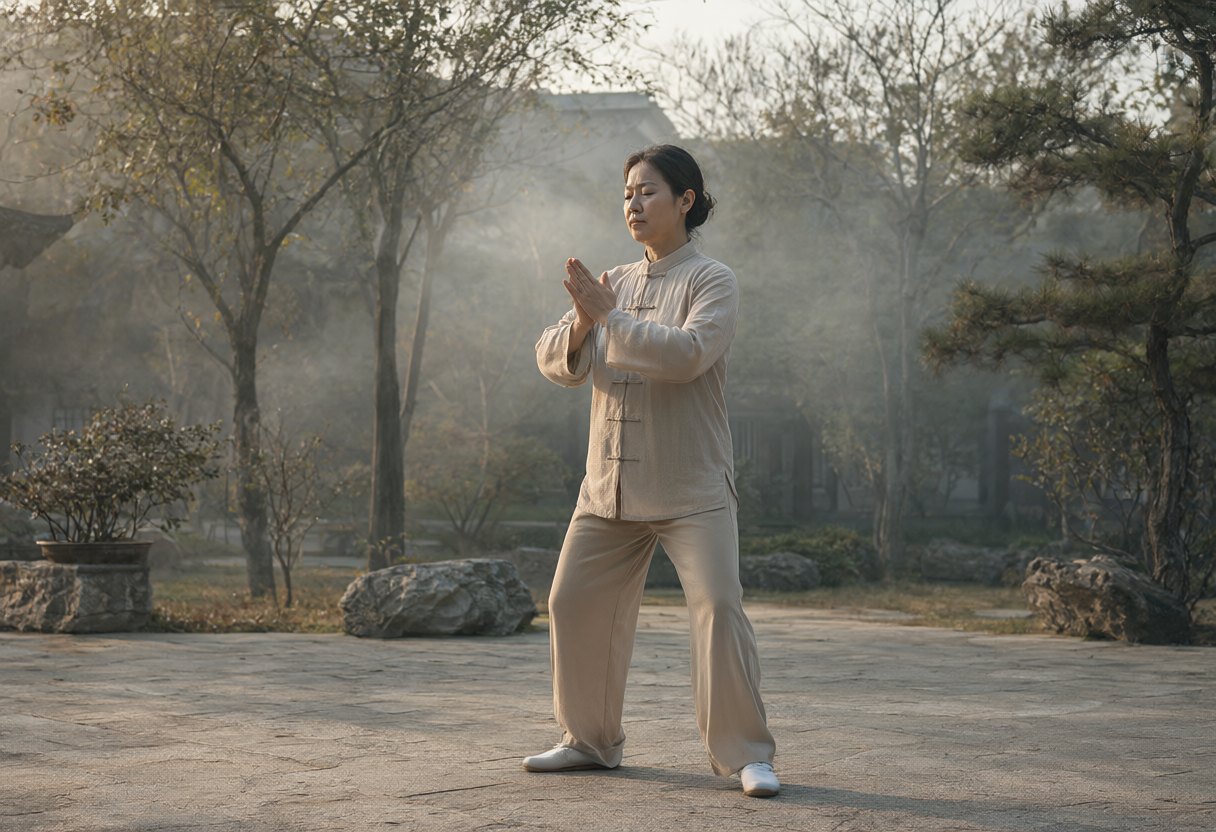
1. Start your day by connecting with qi. Face east around sunrise time and close your eyes. Do He-Shi posture to connect qi with your Tan Zhong energy point. Hold the pose for a few minutes. Chant a qigong sound meditation.
2. Practice simple qigong movements. Many simple qigong movements can be done in a few minutes. Start with a few basic movements in the Preparatory Qigong that Onenergy offers for free in the Onenergy App.
3. Incorporate qigong into your daily activities. You can practice qigong mindfulness, focusing on Three Dan Tian while walking, cooking, or doing other activities.
4. Form a qi field that surrounds you wherever you go. Be consciously aware that you are part of and protected by Hun Yuan Qi all the time. Therefore nothing can harm you as long as you keep that qi awareness.
5. Make time for longer qigong practice 1 to 3 times a week. Once you feel comfortable practicing for a few minutes each day, you can try increasing the time spent practicing a more intense Qigong routine. We offer several Qigong routine sequences in Onenergy App that you can follow.
If you want to improve your health and life in a big way, you need a great qigong master. His role is not to show you the qigong movements but to help tear down your physical and mental barriers. That way qi can penetrate deeper and then you can progress to a deeper level.
You live a qigong lifestyle by incorporating qigong into your daily routine. That way, qi can protect and supplement you. Once you make qigong a habit, you will make practicing Qigong feel just as natural as breathing. We create the Onenergy App to help you build a qigong habit. Just use the App to learn and practice for 10 to 20 minutes daily, and you will guarantee to experience a difference in your health and well-being.
For the full framework behind a routine you can actually keep, see a qigong daily practice routine that actually holds.
A Simple Daily Qigong Routine You Can Actually Keep
A daily qigong routine works because it is repeated, not because it is hard. A short practice done every morning changes your energy more reliably than a long session done once in a while. The body responds to rhythm. When qi is invited to move at the same time each day, the channels learn the pattern and the practice deepens on its own. You do not need an hour. Ten minutes, held daily, is enough to begin feeling the difference within a few weeks.
Stage one — opening (about three minutes)
Stand quietly and let the body settle. Soften the knees, drop the shoulders, and let the breath slow. Gentle, rounded movements at the joints — wrists, elbows, shoulders, hips — wake the body and let stagnant qi begin to circulate. The aim here is not exercise. It is to loosen and open so the energy has somewhere to flow.
Stage two — gathering (about four minutes)
This is the heart of a daily qigong routine. With slow, deliberate movement and steady breath, you gather qi and guide it inward. Keep the attention soft and present. The movements stay gentle; the work is happening in the energy, not in the muscles. Over days and weeks, this is the stage that builds a fuller, steadier reserve of life energy.
Stage three — settling (about three minutes)
Close by bringing the gathered qi to rest in the lower abdomen. Stand still, breathe naturally, and let everything sink and settle. This stage preserves what you built — without it, the qi you gathered scatters. A calm, quiet ending is what carries the benefit of the practice into the rest of your day.
When to practice
Morning suits most people. Practicing soon after waking sets the tone of your energy for the day and makes the habit easy to keep. Any consistent time works, though. What matters is that the time is the same, so the practice becomes something the body expects rather than something you have to decide on.
How long until you feel it
Most people notice a calmer, clearer baseline within a few weeks of daily practice. Deeper changes — steadier energy, better sleep, a stronger sense of the qi itself — build over months. The progress is quiet and cumulative. The only real requirement is that you keep showing up.
Related reading: For the full picture of what this practice is and how it works, see our complete guide — What Is Qigong.