Your Body Is Not a Machine — It Is an Oil Lamp: Understanding Qi Energy and Yang Qi
The model that says your body runs like a machine — input in, output out — is the root of why so many dedicated exercisers feel worse with every passing year.
 By Onenergy Qigong Institute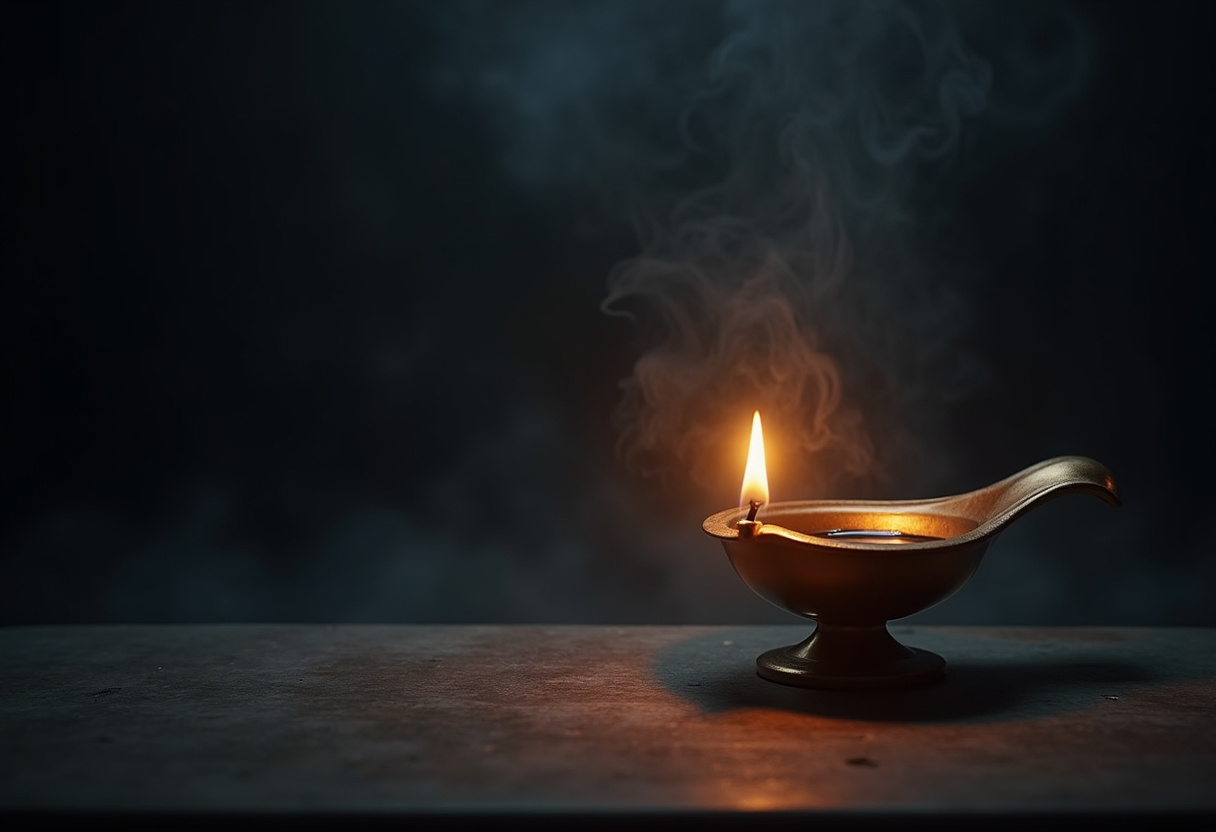
In this article
The idea that the body works like a machine is so embedded in modern fitness culture that most people have never questioned it. Input goes in, output comes out. Run the machine harder and it gets stronger. Rest it, fuel it, and it will perform reliably. The watch on your wrist is built on this idea. The gym program you follow is built on this idea. The dietary advice you have been given since childhood is built on this idea.
There is a different model. Older by five thousand years, and arguably more accurate to the actual experience of a human body aging through decades of effort. It does not require you to believe anything unusual. It requires only that you look honestly at what the machine model has failed to predict — and consider a better frame.
What is qi energy? Starting with what you already know
Before introducing the Chinese framework, a fair version of the machine model. It is not wrong in its domain. Your body does convert fuel to movement. Muscles do respond to progressive load. The cardiovascular system does strengthen under consistent demand. For a twenty-year-old body in its first decade of serious training, the machine model produces good predictions: more input, more output, better performance.
The machine model fails to predict what happens at forty. At fifty. In someone who has trained seriously for fifteen years and is somehow weaker and more fragile than they were at thirty-five. In the person who follows every protocol correctly and still feels like they are running on empty. The machine should not be getting worse. The machine was only given good inputs.
The machine model fails here because your body is not a machine. Your body has a level.
The oil lamp: a better model for what qi energy actually is
In classical Chinese medicine, the body is understood as an oil lamp. The lamp holds a fixed amount of oil. The oil is qi — specifically yang qi, or true yang, the original fire of your life. The flame is what you observe from the outside: your activity, your thinking, your effort, your training. Every action you take in the day is the flame burning.
The brighter the flame burns, the faster the oil disappears.
You were born with a certain amount of oil. You cannot order more from a pharmacy. There are practices — daily, consistent, over years — that can slowly add oil back to the lamp. But mostly, you have to make the original amount last a long time. The whole framework of classical Chinese health practice is built around one question: how do you keep the oil level high?
This is what yang qi means in practical terms. Not an abstract mystical force. Not something you believe in. The level in the lamp that determines whether today’s activity strengthens you or depletes you. When the level is high, the same run that wrecks someone else fills you. When the level is low, a moderate walk can feel like a marathon.
Why the machine model turns up the flame
Fitness culture’s prescription is logical within the machine model: more output equals more health. Burn more calories. Run further. Lift heavier. Train harder. The flame burns bright. The performance metrics look excellent. From the outside, the lamp is impressive.
But the oil — the oil is leaving the lamp faster than ever.
For a few years, even a decade, this is not obvious. The lamp was full when you started. You feel strong. You perform well. Your numbers are good. Then one day the oil drops below the level the flame needs. The lamp shows it in different ways for different people. For the athlete it shows as recurring injuries that take longer to heal each time. For the driven professional it shows as a flatness that no amount of rest seems to fix. For the long-distance runner it shows as the gradual dimming of a body that once felt unlimited.
It looks like a sudden decline. It is not sudden. The oil has been going down for twenty years.
What the Huangdi Neijing said five thousand years ago
The Huangdi Neijing — the oldest foundational text of Chinese medicine — addressed this directly. It warns that those who do not know how to keep their fullness, who do not know how to manage their vitality, are exhausted by the age of fifty. This was not a description of what happened in ancient times. It is a description of what happens now, in every gym, on every running trail, in every office where people push the flame as high as it will go and never think about the oil.
The text was not against effort. It was against the particular foolishness of treating effort as if it builds the thing it spends. A lamp does not refill itself by burning brighter.
What refills the lamp
This is where the model becomes practical rather than merely diagnostic. If fitness culture systematically empties the lamp, there must be a practice that refills it. There is. Classical Chinese practice has named and refined these methods for millennia.
They share a common direction: they bring qi inward rather than sending it outward. They quiet the fire in the head and warm the root. They open the channels the body uses to draw energy from sources deeper than the caloric fuel fitness culture measures. To a fitness watch, these practices look like almost nothing — low heart rate, minimal movement, no calories. Inside, the opposite is happening. The level rises.
The concept is not complicated. What makes it rare is the willingness to practice something that produces no visible metrics and rewards no performance. The flame does not get brighter. The lamp gets fuller. For a culture that measures flame, this is a difficult sale.
But you verify it in yourself. The feeling of a lamp that is filling — not emptying — is specific and unmistakable. It is not a relaxation response or a meditation high. It is a structural change in the level the rest of your life draws from. Workouts that used to leave you flat start to leave you restored. Recovery speeds up not because you trained less but because there is now something substantial to recover with.
The Onenergy app is built around daily practices that add oil to the lamp rather than burning it. Guided routines of stillness, channel-opening movement, and standing practice — none of them produce impressive metrics, all of them address the level the metrics cannot see. The app is free to download and the foundational practices are available to begin today.
For those who want to understand the full framework and feel the practice live, the Onenergy Manifesto — a recurring 90-minute event with Master Dai — is where the concept moves from something you understand intellectually to something you verify in your own body. RSVP through the app.
Related reading
- What is qigong? A complete guide
- Are Fitness Trackers Accurate? What Your Wearable Cannot See
- Why Do Fit People Have Heart Attacks? The Gap Between Visible Fitness and Inner Fullness
- Why Am I Feeling Weaker Despite Exercising? The Answer Fitness Culture Missed
Want to start building your qi through daily practice? The Onenergy App guides you through structured qigong sessions — channel-opening work, standing practice, and more — so you can begin developing your qi system at home. See our pick for the best qigong app to begin.