Why Do Fit People Have Heart Attacks? The Gap Between Visible Fitness and Inner Fullness
The question surfaces after every high-profile collapse: why do fit people have heart attacks? The person was disciplined. They exercised. They looked healthy. The question is asked with genuine bewilderment, as though discipline and visible fitness should be a guarantee against this kind of outcome.
They are not. And the reason why is not mysterious — it is a gap that classical Chinese medicine identified and documented five thousand years ago. The gap between what a body looks like from the outside and what is happening inside it.
Why do fit people have heart attacks: the pattern is not random
The incidents are not rare. Strong-looking people in their forties and early fifties, people with impressive training records and disciplined routines, collapse during or after exercise. Post-mortems often reveal a cardiovascular system in profound distress — sometimes near-complete vessel blockage in someone who ran daily. The outside looked fine. The inside did not.
From within the Western fitness model, this is nearly impossible to explain. The model says: exercise is medicine. Consistent training protects the heart. A disciplined person who keeps up their routine should be among the last to have this problem. When it happens anyway, the usual response is to call it bad luck, bad genetics, or an anomaly — and then advise everyone else to keep exercising as the prevention.
The anomaly is not anomalous. It is predictable from a different model.
A recent story, unnamed
There was a man — you can search for this; the case is public, and we will not name him — forty-one years old. He had built something significant. He was proud of his work ethic and his fitness discipline. Every morning, after working through the night, he ran seven kilometres on a treadmill. He posted his workouts. People admired his dedication. Hard work and physical fitness, combined: the modern model of success.
Two years before he died, he had been hospitalised. Chest pain. Heart palpitations. He was told it was from overwork. He recovered and returned to exactly the same life. Same overnight hours. Same morning treadmill. The same proud discipline.
One morning in March, he finished an overnight shift, went to the treadmill at his company, ran, and collapsed. At the hospital, doctors found ninety percent blockage in his cardiac vessels. Almost completely closed. He had been running a seven-kilometre morning sprint on a heart that could barely pass blood through it. He did not know. His fitness watch did not know. He died that afternoon.
He looked fit. He was already dying. The device on his wrist could not see it.
The oil had been going down for twenty years
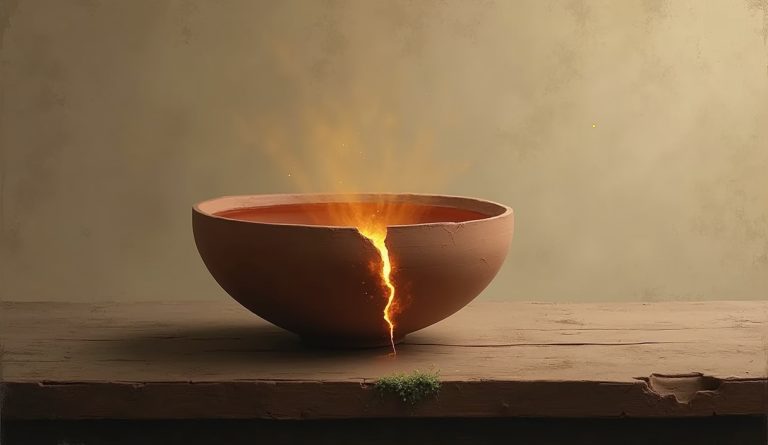
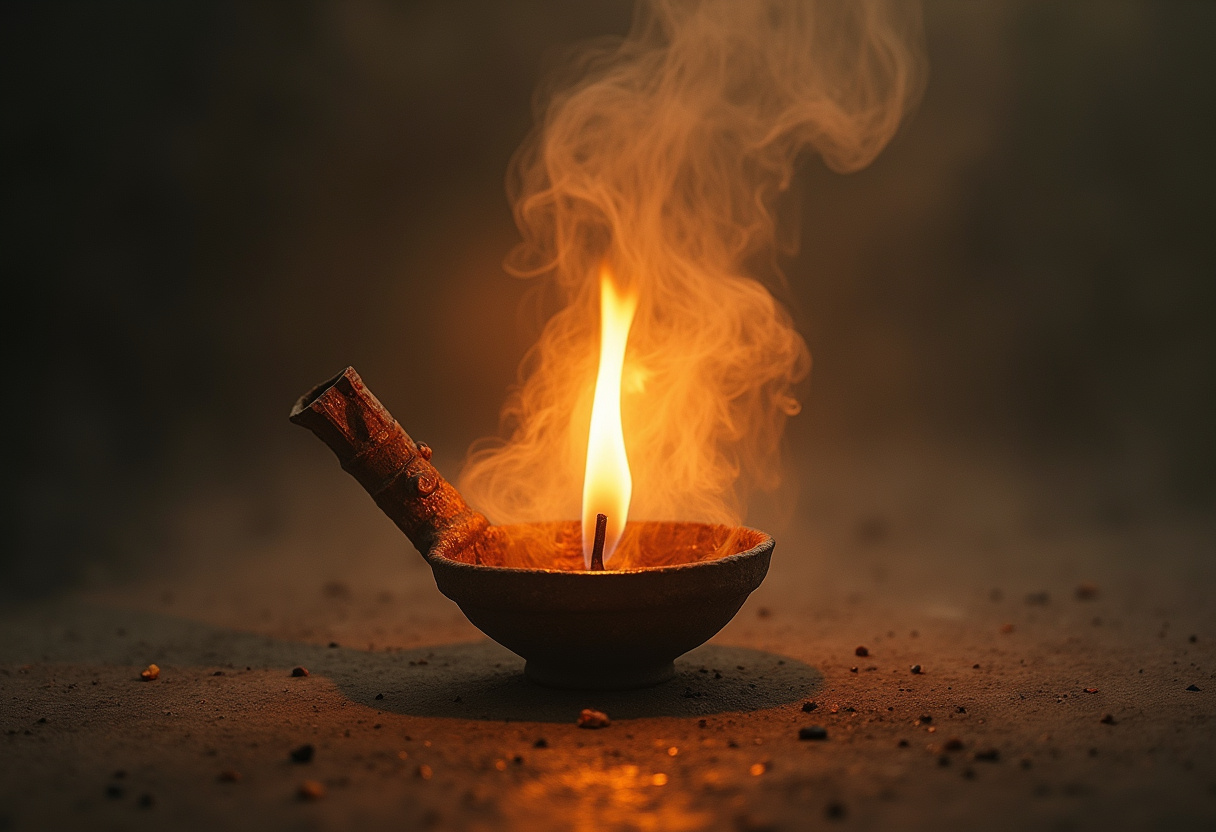
This is what it looks like when someone has been burning the lamp brighter than the oil can sustain — for long enough that the structural consequence becomes irreversible. From the outside: a disciplined, impressive person. From the inside: a lamp almost out of oil, still burning at full intensity because no one taught him that the flame and the oil are two different things.
It looked sudden. It was not sudden. The depletion was decades in the making.
This is the pattern the Huangdi Neijing — the five-thousand-year-old foundational text of Chinese medicine — explicitly warned against. Those who do not know how to keep their fullness, who do not know how to manage their vitality, are exhausted by fifty. The text was not predicting an ancient phenomenon. It was describing what happens when the output-as-health model is followed without a counterbalancing practice that refills what the output costs.
Visible fitness is not the same as inner fullness
This is the essential distinction that the Western fitness model has no language for. A body can appear fit by every external measure — muscle definition, lean body composition, consistent training logs, respectable cardiovascular metrics — while the deeper reservoir of vitality is critically low.
In the classical Chinese framework, this reservoir is yang qi: the original fire of a person’s life, the oil in the lamp that all activity draws from. It does not show up on a fitness tracker. It does not appear in a body composition scan. It is not visible in a training log. But when it is depleted to the point of near-exhaustion, the next demand can be the one the system cannot meet.
This is not an argument to stop exercising. Movement is genuinely good for the body. It is an argument that the fitness model measures only what it rewards — the output — and has no concept of the reservoir the output is drawn from. A person can be excellent at producing output while their reservoir approaches zero. The watch praises both equally. The body does not.
What the case illustrates — and what it does not
The case above illustrates one thing: visible fitness is not the same as inner fullness. A person who looks fit and disciplines themselves to maintain their fitness routine can be doing so on a near-empty lamp. The outside does not tell the story of the inside.
What the case does not illustrate: that qigong would have saved him, that practice prevents heart attacks, or that any discipline is a medical substitute. We are not making those claims. The people who manage cardiovascular health — cardiologists, physicians — are where medical decisions belong. Nothing here should be read as a recommendation for or against any particular medical care.
What we are pointing to is a structural gap in how modern culture thinks about effort, discipline, and health. The person in the story was not undisciplined. He was, by any conventional measure, exceptionally disciplined. But his discipline was entirely focused on output. Not a single practice in his life was directed at refilling the lamp. This gap — not bad luck, not genetics, not anomaly — is the pattern.
The five-thousand-year warning
Classical Chinese health practice is, at its core, a technology for keeping the lamp full. It is not against effort. It is not against ambition. It assumes both and adds the one element that the effort model always leaves out: a regular, consistent practice that returns qi to the system rather than spending it.
Stillness that cools the overheated mind and lets the fire sink down to the root. Movement that opens the body’s channels and lets energy circulate rather than pool. Standing practice that connects the body to a source deeper than caloric fuel — earth qi rising through the root while the fire in the head cools. These are not dramatic. They do not produce impressive metrics. They address the level everything else draws from.
Most people who begin this kind of practice are surprised by how different they feel within a few weeks — not because of anything they added to their output, but because the underlying level began, for the first time, to rise rather than fall. You verify it in yourself. The felt sense of a lamp that is filling is specific and unmistakable, and no description can substitute for the direct experience of it.
The Onenergy app provides guided daily practices built on this classical framework — free to download, with foundational routines that begin simply and build with the practitioner over time. The Onenergy Manifesto — a recurring 90-minute live event with Master Dai — is where this framework comes into direct felt experience for the first time: not the concept of refilling the lamp, but the actual sensation of the oil rising. RSVP is through the app.
The pattern the ancient text described has not changed in five thousand years. The warning is as relevant today as the day it was written. The choice of what to do with it remains, as it always has, entirely yours.
Related reading
- What is qigong? A complete guide
- Your Body Is Not a Machine — It Is an Oil Lamp: Understanding Qi Energy and Yang Qi
- Why Do Legs Get Weak with Age? (It Starts at the Root, Not the Muscle)
- Are Fitness Trackers Accurate? What Your Wearable Cannot See