You Are Not a Machine
The body-as-machine is a 400-year-old story, not a fact. Understanding this changes everything about what healing actually means.
 By Onenergy Qigong Institute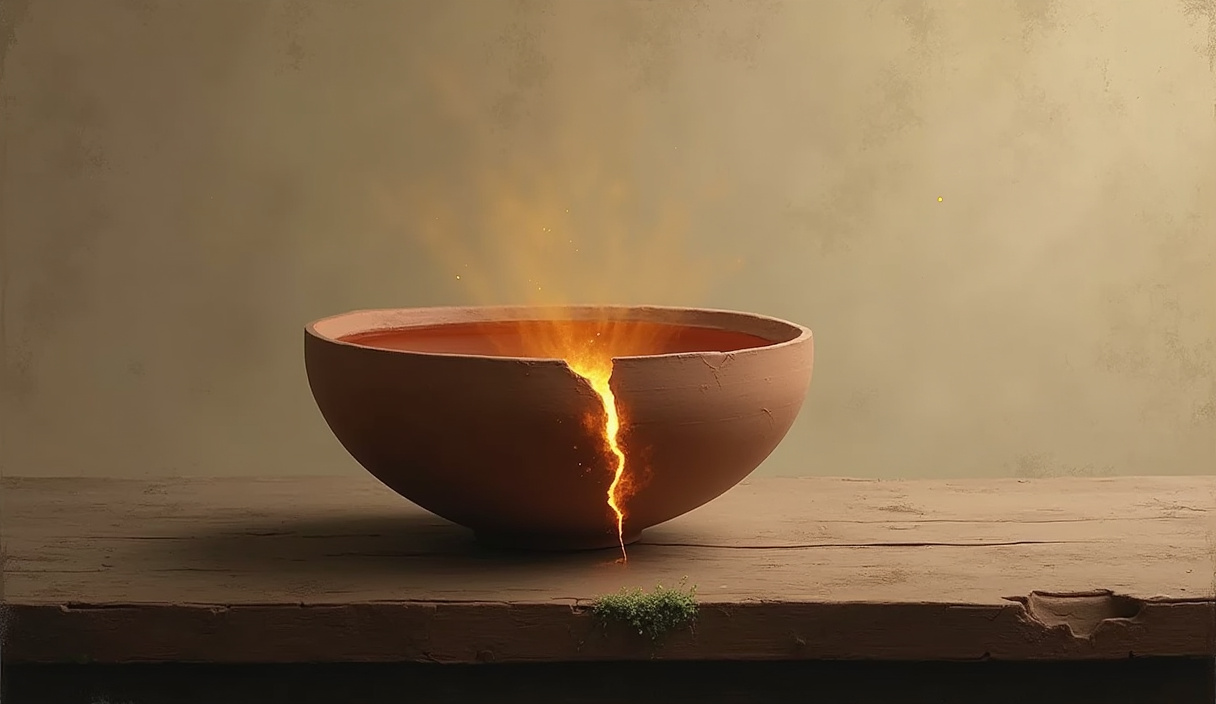
In this article
“Nobody assembled you from outside. You grew. From inside.”
The machine model of the body has been so dominant for so long that most people do not notice it as a model. They take it as a fact. You have a heart, lungs, kidneys. When one goes wrong, a professional intervenes and fixes the part. Same logic as a car. Same logic as a washing machine.
But there is a question that this model has never been able to answer. No machine has ever built itself. No factory has ever grown its own factory floor.
Your body did exactly that.
And it is still doing it right now.
The story is 400 years old
René Descartes wrote in the 1640s that the body was a machine governed by mechanical laws. He was trying to solve a real problem — how does a physical body interact with a thinking mind? His answer was that the body and mind were separate things. The body was mechanism. The mind was elsewhere.
This gave Western medicine a usable frame. If the body is a machine, then you can study it in pieces. You can dissect it, map it, test each part in isolation. You can build a science around it.
And for four centuries, that science built astonishing things. Surgery. Antibiotics. Vaccines. When the body is in emergency — broken bone, bacterial infection, acute failure — the machine frame produces intervention that saves lives.
But the frame was never designed to explain how the body came to exist. And it was never designed to explain how the body heals itself.
For that, you need a different story.
The body grew
Begin with one fact. Every living human body began as a single cell.
Not a collection of parts waiting to be assembled. One cell, containing instructions so compressed that they would fill a thousand books, that began to divide and differentiate and organize itself into what you are now.
Your liver was not installed by a technician. It grew. The branching architecture of your lungs — millions of air sacs arranged to maximize surface area across a space the size of a fist — was not designed by an engineer and built to spec. It grew. The neural network inside your skull, with more connections than anyone has ever counted, organized itself through a process that modern biology is still working to describe.
Nobody was there. Nothing was assembled from outside.
The intelligence that produced the body was already inside the cell. It is still inside the body now. It never stopped.
That same intelligence handles the daily work. Recent research estimates the body replaces billions of cells every single day. Old cells are cleared. New ones are built to specification, positioned precisely, connected to their neighbors. The skin you will be living in a month from now does not exist yet. The body will make it. Without your input.
A machine cannot do this. No machine has ever done this. The body is not a machine. It is something the machine model has no word for.
A simple test, right now
Before you continue reading, put both hands on your body. One hand flat on your chest. One hand flat on your lower abdomen.
Close your eyes.
Count one minute of breath without managing it. Do not deepen it. Do not slow it. Do not improve it. Just let it do what it was already doing before you started paying attention.
Notice three things.
One — you did not start the breath. It was running before you put your hands there.
Two — your heart is beating without any decision on your part.
Three — your hands are warm. That warmth is metabolic. Billions of processes, running continuously, producing heat as a byproduct — and you did not turn any of them on.
The breath is happening to you. Not from you.
The heartbeat is happening to you.
The digestion, the immune response, the repair of yesterday’s micro-tears in your muscles — all of it happening to you, without your management.
That is the same intelligence that grew you from one cell. Still running. Still building.
The machine model has no explanation for where this comes from. It never has.
What this means for healing
If the body grew itself, then the model of healing as something done TO you from outside is upside down.
Consider what happens when you cut your skin. You do not heal the cut. The body heals it. The intelligence in the tissue sends material to the site, builds a clot, then connective tissue, then new skin. If you are in good health, this process is fast and complete. If you are depleted — poor sleep, chronic stress, years of nutrient debt — the healing is slow and incomplete.
The variable is not the treatment applied from outside. The variable is the state of the body’s own capacity.
This is true of small wounds. It is true of larger conditions. The body’s ability to restore its own balance depends entirely on whether it has the material, the flow, and the direction to do so. When those three things are present, the body does not need to be told what to do. It already knows. Five thousand years of observation confirms this. The body’s intelligence is not passive. It is not waiting for instructions from outside. It is actively running the restoration the whole time.
The practitioner who understands this does not try to fix the body. The practitioner cooperates with what the body is already doing. The question is never, how do I make this heal? The question is, what does the body need so it can resume what it already knows how to do?
That is a different discipline entirely.
The crack is not the problem
There is a ceramic repair tradition in Japan called kintsugi. When a piece of pottery breaks, the craftsman fills the crack with gold. The crack is made visible. The crack is made beautiful. The object that has broken is worth more after the repair than before.
The idea behind this: the crack is not a flaw that erases value. The crack is part of the history of the thing.
Most people who have lived inside the machine model for years come to believe that something is wrong with their body. The symptoms are evidence of malfunction. The failed protocols are evidence of inadequacy. The years of fatigue or pain or anxiety are evidence that the machine is broken.
That reading is backwards.
The body is not malfunctioning. The body is expressing exactly what its current state of material, flow, and direction produces. It is behaving correctly for what it has been given. The hairline crack in the vessel is not the end of the story. It is data. It is the body communicating what it needs.
If you begin from that position, everything shifts.
You are not a machine with a defective part. You are a living whole with an intelligence that grew you and is still present, still running, still asking to cooperate.
That cooperation is what the practice is.
Where to go from here
This is what qigong is actually for. Not exercise. Not relaxation. Not another wellness protocol applied from outside.
Qigong is a method for returning your attention to the intelligence that is already running your body, and learning to stop interfering with it — and eventually, to actively work with it.
The practice is not complicated. It does not require believing anything. It requires doing something with your body, paying attention, and noticing what changes.
If what you read here landed in your body and not just your head, the next step is simple. Download the Onenergy App. Master Dai teaches the foundational practice live in the app every week — the schedule is on the home screen, free, open.
You will be asked to test something in your own body. That is the only authority that matters here. Yours.
About Master Dai
Master Dai is an officially trained, certified qigong teacher with almost forty years of practice and teaching in this work. He founded the Onenergy Qigong Institute and built the Onenergy App to carry the wisdom of a five-thousand-year-old practice into a form a modern person can actually use. He teaches live in the app every week.
Related reading
– The Great Lie of Modern Healing — the machine model and why it has failed chronic care – Four Windows, One Room — why chronic symptom stacks are one problem, not four – You Are Not Broken. The Tool Was. — healing the self-blame the system produced