
You Are Not Broken. The Tool Was.
Western medicine is a chainsaw. It excels at what it was built for. You just needed a needle and thread. A different category of tool entirely.
 By Onenergy Qigong Institute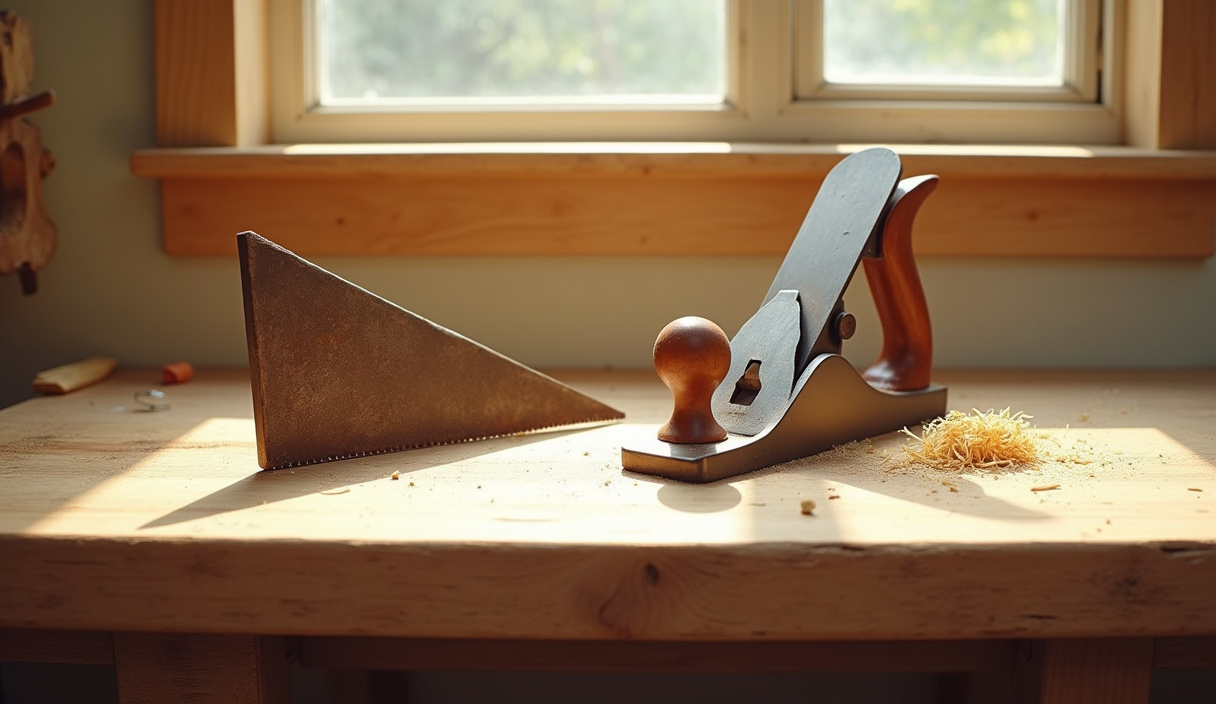
In this article
You are not broken. You have been handed the wrong tool for the work.
There is a verdict that lives quietly in most people who have spent years trying to be healthier, more focused, more energized, more themselves.
The verdict does not usually announce itself out loud. It sits in the background, below the level of thought. It shows up as a slight heaviness when you consider starting again. A brief internal flinch when someone mentions discipline or consistency or morning routines.
The verdict sounds like this: Something must be wrong with me.
You have tried ten programs. You have read twenty books. You have started the same habit from scratch more times than you can count. Every time it collapsed — not because you ran out of ideas, but because you ran out of something the ideas could not supply — the system trained you to conclude that the failure was personal.
That verdict is the deepest wound the modern wellness industry produced.
It is also false.
The chainsaw and the needle
A chainsaw is a brilliant tool. It cuts down trees in seconds. There is nothing wrong with a chainsaw.
Hand a chainsaw to someone who needs to thread a needle, and they will fail every time.
And if nobody tells them they have the wrong tool, they will eventually conclude that they are the one who is broken.
This is the situation. Precisely.
Western medicine is a chainsaw. So is the wellness industry that grew up beside it. These are not failures. They are extraordinary achievements. Surgery, antibiotics, trauma care — modern medicine steps in when the body cannot recover on its own, and it performs that work better than anything humanity has ever built. The chainsaw cuts trees. It is the right tool for trees.
But most people who have been cycling through programs and protocols for five or ten or twenty years are not dealing with a tree. They are dealing with something slow, interior, systemic — a quality of energy, a depth of recovery, a capacity the body has been losing for years. Chronic fatigue. Fog that will not lift. A resilience that used to be there and now is not. These are needle-and-thread problems. They need precision, patience, and a completely different category of tool.
You were handed a chainsaw. You tried to thread a needle with it. It did not work. That is not a character finding. That is a physics finding.
The category the wellness industry never named
In medicine there is a word for harm caused by the treatment itself: iatrogenic. From the Greek for physician. Illness caused not by the original disease but by the intervention.
Modern medicine takes iatrogenic harm seriously. Every drug approval weighs therapeutic benefit against iatrogenic risk. Hospitals track iatrogenic injuries. Medical schools teach it.
The wellness industry does not apply the same accounting to itself.
For a hundred years the industry’s main message — dressed in different clothes every decade, sold in different formats — has been some version of the same instruction: try harder. Want it more. Be more consistent. Build a better system. Journal the resistance. Visualize the outcome.
When people follow the instruction and still do not get the result, the framework has only one explanation available. Not enough wanting. Not enough trying. Not enough discipline. The model cannot point at the model. So it points at you.
This is iatrogenic harm in plain sight.
The treatment — the knowing, the protocols, the productivity frameworks, the morning routines, the self-improvement architecture — produced the very wound it claimed to heal. The person who walks away from their twelfth failed program is not the same as the person who walked into their first. They are heavier. The self-blame has compounded. Each cycle added another layer to the verdict.
The chainsaw was never the right tool. But nobody said so. So you kept running it. And every failed pass across the thread convinced you the problem was in your hands.
The system did that. Not you.
What the cycle is actually measuring
Here is what the cycle reveals, when you look at it correctly.
Knowledge → effort → quit → self-blame → more knowledge. That loop runs in millions of adults, at a level of consistency that should raise a scientific question: why does the same loop repeat, across thousands of different people, across decades?
The standard explanation is character. Some people have the willpower to break the loop. Others do not. This is the framework that produces the verdict.
The correct explanation is material.
Think of a marathon runner who has been training on poor sleep, skipping meals, running on stress and caffeine. On race day, somewhere between mile eighteen and mile twenty-two, the body stops. Not the will. The body. Glycogen is depleted. The substrate that the performance was drawing on is gone. No amount of self-talk gets the runner across the finish line at that point.
The self-help industry has been selling race strategy to people who were never given the material to race on.
The programs did not fail because you lacked discipline. They required a fuel the body had not been given the means to build. When the fuel ran out — and it always ran out, because the chainsaw was never designed to build fuel — the body stopped. And the industry handed you a story that said that stop was a character defect.
It was not. It was physics.
A test, right now
Recall the last time a program collapsed. The moment you stopped.
Notice what you told yourself at that moment. About what it meant. About what kind of person stops.
You probably do not need to search hard for that story. It has been there a long time.
Now say these words out loud. Not silently. Out loud.
I was handed the wrong tool for the work.
Say it. Then sit still for thirty seconds.
Notice what happens in your chest. Notice what happens in your jaw. The body responds to true statements differently than it responds to false ones. Most people feel something release. A slight drop in the shoulders. A breath that goes a little deeper than the last one. Something being put down.
That release is not agreement with an idea. It is the body recognizing something it already knew. The body has known all along that the verdict was wrong. The body has been waiting for permission to say so.
This is where real practice begins. Not with motivation. Not with a new program. With putting down the wrong verdict.
The correct diagnosis
The body that could not sustain your program was not broken. It was depleted.
Depletion and brokenness look identical from the outside — both result in the loop stopping. But they are different problems with different solutions. A broken tool needs replacement. A depleted body needs material.
You are a living system. You did not assemble yourself from parts. You grew, from one cell, by an intelligence that was already inside you before you had a brain, before you had lungs, before you had a word for anything. That intelligence is still running. It is running right now, while you read. It is governing processes you have never consciously managed — cell turnover, immune response, the precise calibration of a thousand chemical balances simultaneously.
The intelligence is intact. What it has been given to work with has been insufficient.
Every protocol that asked your body to perform without first replenishing what performance draws on was asking the runner to finish the marathon on empty. The runner was not the problem. The preparation protocol was.
This is not a new story. It is the precise story that classical qigong has been telling about the body for five thousand years. Not as philosophy. As a working diagnosis with a working solution.
The solution is practice — real practice, body-first, repeated, built from the ground up — that gives the body the material it keeps being asked to draw on. Not information. Practice.
Practice is not something you understand. It is something the body does. The body learns through repetition, through attention, through breath and movement organized in a way that builds what gets used. Daily, until the reservoir fills. Then daily after that, to keep it full.
Qigong is not the bigger, better chainsaw. It is the needle and thread. A different category of tool entirely, for a different category of work. You will not cut trees with it. You were never trying to cut trees.
What changes when you put down the verdict
The verdict is heavy. Most people have been carrying it for years without noticing it has weight.
When you put it down, two things open.
The first is space. Energy that was organized around self-defense — around managing the story of what is wrong with you — becomes available for something else. This is not metaphor. Chronic self-blame is physiologically expensive. The body is not neutral about shame. Research on shame-based behavior change is consistent: shame does not increase adherence to health practices. It decreases it. The industry that built its messaging on “you are not trying hard enough” was not motivating anyone. It was running the fuel down faster.
When the verdict lifts, the body has more to work with. Not because circumstances changed. Because one very expensive internal process stopped.
The second thing that opens is direction. The verdict was terminal. Something is wrong with me is a closed door. I was handed the wrong tool is an open one. It points somewhere. It asks a different question: what would the right tool look like?
The answer is practice. Not more knowing about practice. The practice itself, in the body, on the ground, every day.
Every Onenergy session is built around that practice. Infrastructure the body builds. Not information the mind collects.
You were never the problem.
Where to go from here
The body that held that verdict is the same body that is ready to practice. Nothing needs to be fixed before you begin. There is no version of yourself you have to become first.
Master Dai teaches the foundational practice live in the Onenergy App every week. The schedule is on the home screen. It is free and open.
The first session does not ask you to believe anything. It asks you to test something in your own body. The body will decide. That has always been the only authority that matters.
About Master Dai
Master Dai is an officially trained, certified qigong teacher with almost forty years of practice and teaching in this work. He founded the Onenergy Qigong Institute and built the Onenergy App to carry the wisdom of a five-thousand-year-old practice into a form a modern person can actually use. He teaches live in the app every week.
Related reading
– The Great Lie of Modern Healing — the machine model underneath every piece of health advice you have been given for a hundred years – Knowing Has Never Healed Anyone — why information does not do what the body needs – You Are Not a Machine — the body as living whole, in depth