
Can Qi Affect Plants? The Qigong Crop Field Trials
A rice paddy has no beliefs to influence, which is exactly why the qigong crop field trials are one of the most interesting places the practice has ever been tested.
 By Onenergy Qigong Institute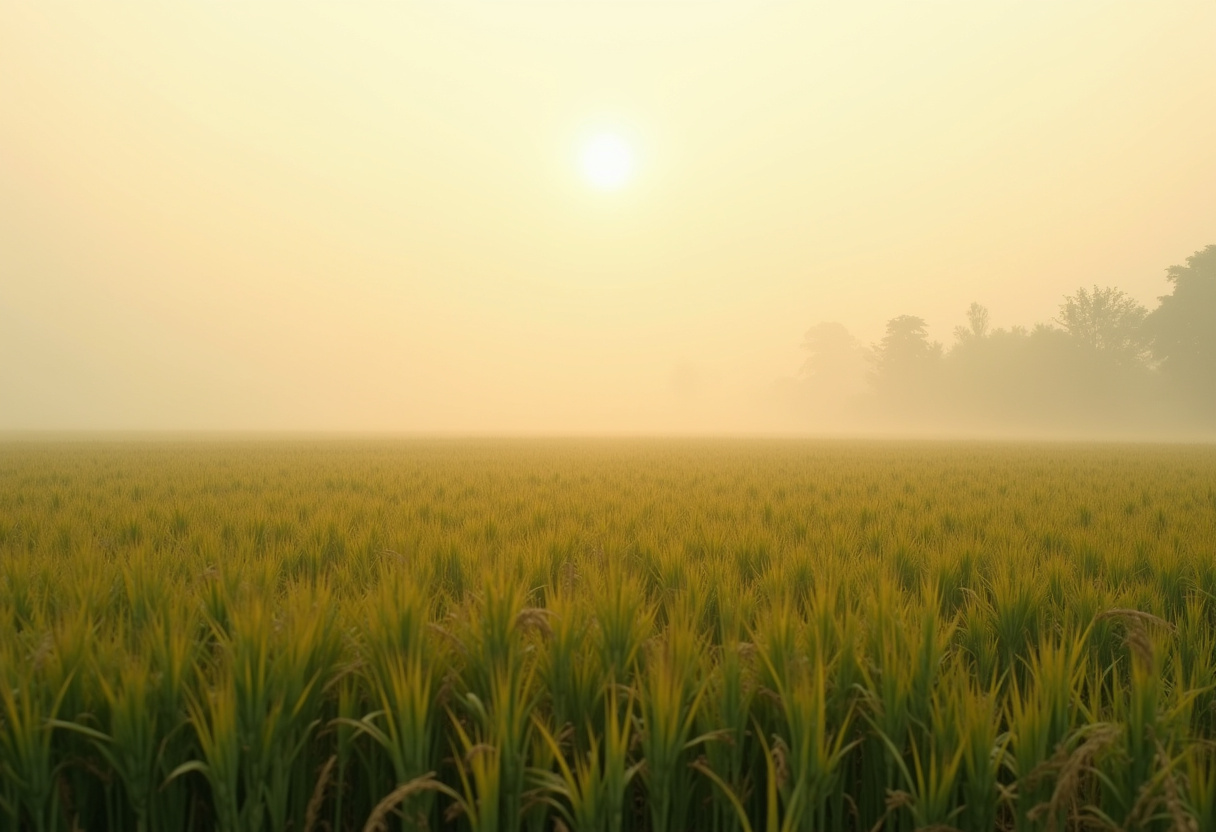
In this article
Can qi affect plants that have no mind, no nervous system, and no capacity to believe in anything? It’s a fair question, and it turns out to be one of the more interesting places qigong has actually been tested — not in a clinic, but in a field.
A rice paddy has no beliefs
Whatever else is true about qigong, a stalk of rice cannot talk itself into feeling better. It cannot want to please a teacher, and it has no expectations about what is supposed to happen to it. That makes crops one of the cleanest places to ask whether something measurable is actually happening — because if a plant’s yield changes, placebo is not an available explanation.
Field trials on exactly this question were run with China’s agricultural institutes, including work connected to Beijing Agricultural University and the Academy of Agricultural Sciences. The design was simple: an experimental field and a control field, planted with the same crop, in the same soil, watered the same way, under the same weather. The only difference between them was that one field received qi and the other did not.
What the harvests showed
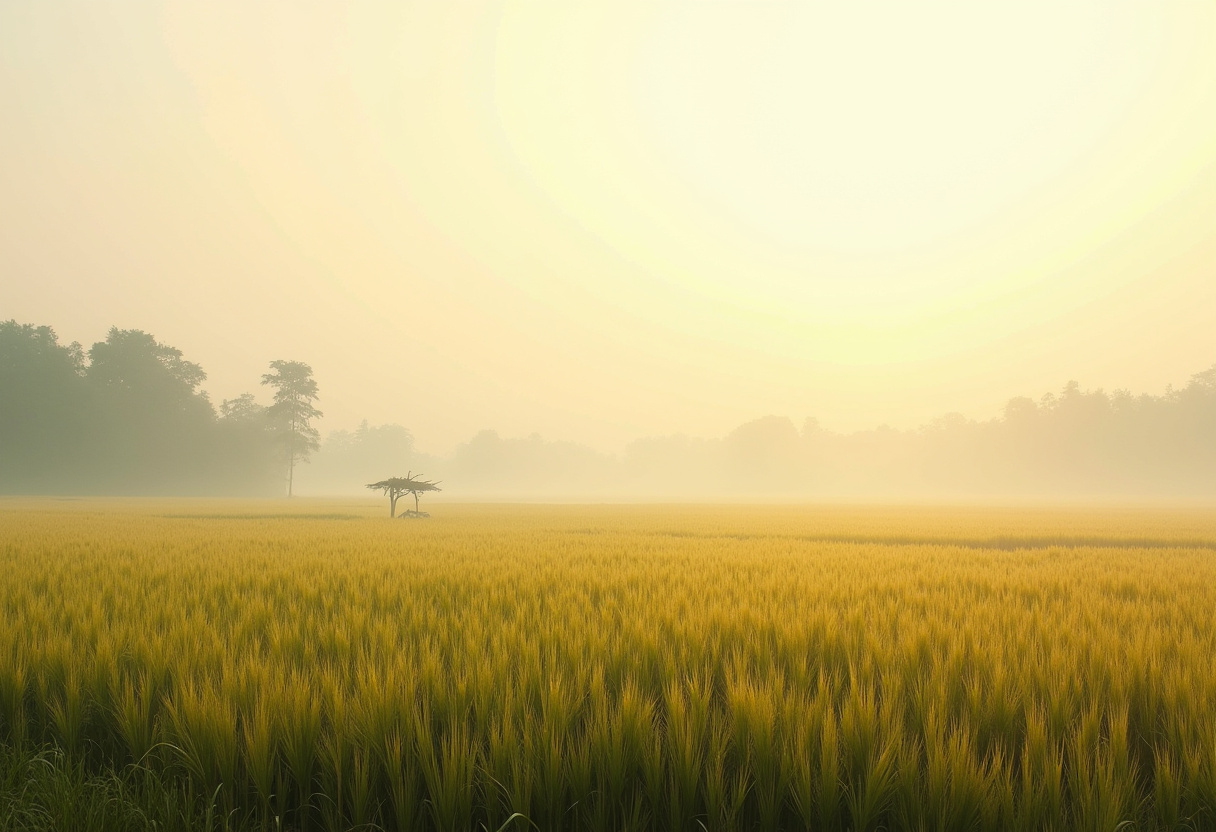
According to the reported results, wheat yields in the experimental fields rose roughly four to eight and a half percent over the control fields. Rice rose as much as twenty-eight and a half percent. Corn came in around twelve and a half percent higher. Cabbage showed the largest reported gain, at close to thirty-three percent.
These were not small pots on a windowsill. One trial covered thirty mu of rice — about five acres — at a farm outside Beijing, and came in roughly twelve and a half percent above the control. Another covered nine mu of wheat — about one and a half acres — in Henan province, and came in up nearly fifteen percent. Seeds were checked too: in the qi-treated group, about ninety-seven percent germinated, compared with roughly ninety-four percent in the control.
Grain does not know what it is supposed to prove. It grows, or it does not.
Why this matters more than it might first seem
The most common explanation offered for any reported qigong result is placebo — the idea that believing you’ll feel better is enough to make you feel better, regardless of what actually happened. It’s a reasonable objection, and it applies to plenty of human health claims. It does not apply here. A rice paddy does not know it is part of an experiment. A cabbage cannot expect anything. Whatever moved the yield numbers in these trials, it was not belief.
That does not prove every claim ever made about qigong. It does narrow the field of honest explanations considerably. Something measurable happened in a living system that had no psychology to influence.
The honest caveat
These figures come from the agricultural institutes’ own reported field data, not from an independent Western replication — because no independent Western study of this work has ever been conducted. That is an important qualifier, not a footnote to bury. The results were not fabricated for a Western audience; they were recorded as part of ordinary agricultural trial work in China, and they have simply never been checked by anyone outside that system.
The honest position is to treat these numbers as reported, not as established scientific fact beyond dispute — a real and internally consistent body of trial data that deserves attention precisely because no one has looked closely enough yet to confirm or challenge it further. That gap is the invitation, not the disqualifier.
What a plant can teach you about your own practice
The deeper point of the crop trials is not agricultural. It’s a reframe: qigong does not appear to act only on human belief or human physiology narrowly defined. It appears to act on something more basic that a rice stalk and a person share — being alive at all. Health is one place that shows up. A wheat field, apparently, is another.
You cannot run a five-acre field trial in your living room, but you can run the version of this experiment available to you: practice consistently, and watch what changes in your own body over time, without needing anyone’s belief to make it real. The Onenergy app offers a free, guided way to start that daily practice and observe your own results directly.
Beyond the grain fields
The reported trials were not limited to staple crops. Related field work with the same agricultural institutes reportedly extended to fruit trees, grapevines, and even fish farming, with qigong-treated groups showing measurable gains over untreated controls in each case. The pattern holds across a much wider range of living things than a single crop study could show on its own — different species, different growing seasons, different institutes running the numbers, and a similar direction of change each time.
None of this turns qigong into an agricultural product, and none of it is presented here as a recommendation for farming practice. It is presented as what it is: a wide, reported pattern in living systems that cannot believe anything, gathered by people whose day job was measuring crop yields, not proving qigong.
Reading the numbers like a skeptic, not a believer
A fair skeptic should ask who measured the yields, and whether they had any reason to inflate them. The honest answer is that agricultural institutes exist to measure crop yields accurately, year after year, for entirely unrelated economic and planning reasons — not to promote qigong. That does not make the numbers infallible, but it does mean the people recording them were not part of a marketing effort. They were doing their ordinary job, and qigong happened to be the variable under test that season.