

Why Do I Feel Empty After Crying?
You cried, hard, and let it all the way out. You expected to feel lighter afterward — released, maybe even peaceful. Instead, an hour later, you feel empty. Flat. Like something has been drained out of you, and all you want to do is lie down. Why do you feel empty after crying, when crying is supposed to be a release?
The pressure-drop part is real. In the moment, letting a feeling out does relieve something. But what shows up afterward — the emptiness, the flatness, the low energy — is a different thing entirely, and it has an explanation once you stop looking at it as only an emotional event and start looking at it as an energy event.
Why do I feel empty after crying? The qi left with the tears
In the old Chinese medical texts there is a line that names this directly. Bei ze qi xiao — 悲则气消. Say the plain English first: grief scatters the qi away. When grief takes over fully, it does not simply pass through you — it carries your qi, your working energy, out along with it.
That is the difference between feeling something and being emptied by it. A wave of grief moving through you is one thing. Crying until there is nothing left, until every last bit of the feeling has been wrung out, is a different event, and it comes with a cost. What you feel afterward is not peace settling in. It is what it feels like when qi has left the building.
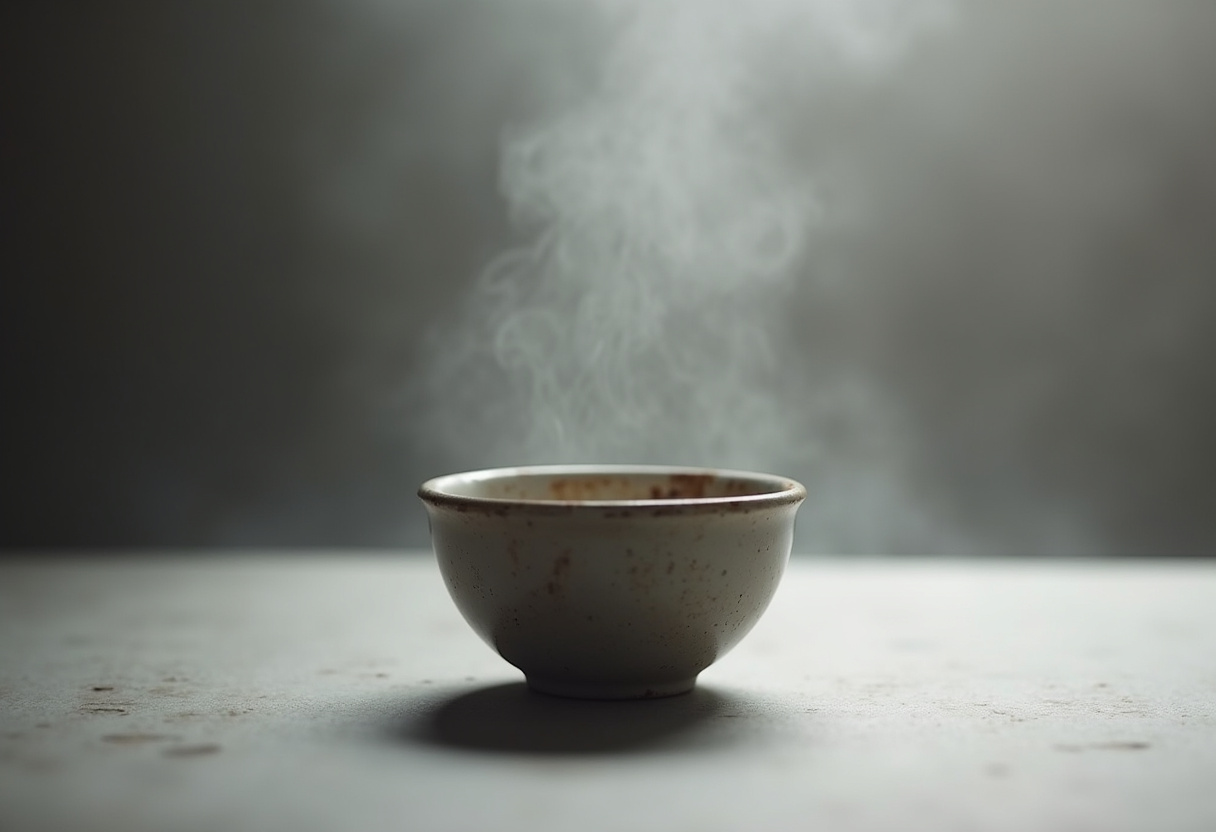
Empty is not the same as calm
It is easy to mistake the two, because both feel quiet. But calm is a full, settled state — your energy is there, steady, at rest. Empty is an absence. There is simply nothing there to be steady. You can tell the difference by what comes next. Calm carries you through the rest of your day. Empty leaves you wanting to lie down and do nothing.
Think about a hard argument between two people that goes all the way to the bottom — both sides shout until there is nothing left, and then it stops. Look at what actually happened. Nothing got settled. Watch them afterward, and they still barely speak to each other. They simply have nothing left to fight with. That is not resolution. That is depletion, and it looks a great deal like the quiet after a long cry.
What was spent, and why it matters
Before the crying started, something had been gathering — a working reserve of energy, built slowly, the way anything worth having is built. Pouring every bit of a feeling out in one go spends that reserve in a single stroke, the way a person who has just started saving money empties the account the same evening. Nothing is resolved by the spending. There is simply less left than there was before.
What this is not saying
This is not a judgment about whether crying is good or bad, and it is not a statement about how anyone should process a hard day or a hard year. It is a plain description of what happens to your qi when a feeling is emptied all the way out rather than allowed to move through. What you do with your own emotional life, and who you talk to about it, is entirely yours to decide, and this article is not advice about that.
One practical note: if the empty, flat feeling shows up after every single practice, or shows up for reasons that have nothing to do with your practice at all, that pattern is worth bringing to a real teacher who can watch you directly, rather than working it out alone from an article.
How to tell the difference next time
The clearest test is not how hard you cried. It is how you feel an hour later, doing something ordinary — making dinner, answering an email, sitting in traffic. If you feel steady and present, the qi moved through and settled. If you feel like you are running on nothing, the qi went out with the tears.
This is not something you have to guess about after the fact. You can watch it happen in real time. Notice the point where a wave of feeling stops being something that is passing through you and becomes something you are actively pushing all the way out — chasing the very last bit of it, insisting there be nothing left. That is usually the moment the qi stops moving and starts scattering.
What to do instead
The alternative is not holding a feeling back. It is letting it move through you without chasing it and without pouring it all the way out — keeping the movement of your practice going, keeping your breathing steady, and finishing properly instead of stopping the moment the feeling arrives. Done that way, you feel it, and you still have something left afterward.
You can test the difference yourself. Notice, next time, whether you finished the feeling or emptied yourself of it, and notice how different the hour afterward feels. If you want a steady daily place to practice this, the Onenergy App is free to start.

Related reading
- Should You Let Yourself Cry It Out During Qigong?
- Why Do I Cry During Qigong?
- Can Emotions Be Stored in the Body?
- What Is Qigong? The Complete Guide