
What Is Frost's Descent? How to Live the First Frost of the Year
Frost's Descent (霜降) runs from October 23 to November 7, 2026. What it means, what to eat, how to live, and a two-minute practice to warm your lower back.
 By Onenergy Qigong Institute

In this article
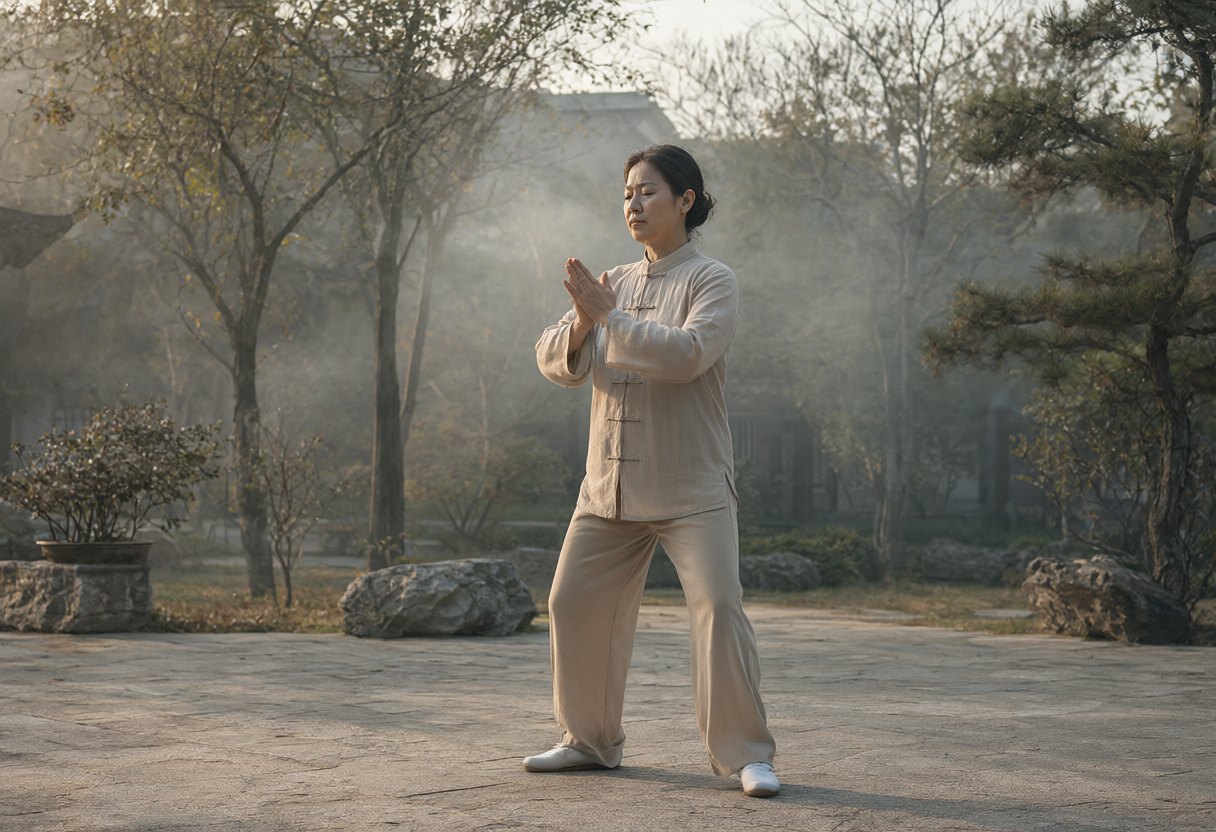
The leaves are almost all down. Some mornings the grass is white and stiff, and your breath shows in the air. In the old Chinese calendar this moment has a name: Frost's Descent, 霜降 (Shuāngjiàng). In 2026 it begins on October 23 and runs until November 7, when winter begins.
It is the last of the six autumn solar terms. It is also the last chance in the year to get ready for the cold before the cold arrives.
What does Frost's Descent mean?
Shuāng means frost. Jiàng means to fall, or to come down. The name describes exactly what happens: the first frost of the year settles on the ground.
The old calendar divides the year into 24 solar terms, each about fifteen days long. Each one has a name that tells you what nature is doing right now. Frost's Descent tells you that the warm half of the year is over. The air is dry and cold in the morning, the days are short, and the last harvests are being brought in.
Each solar term is also split into three five-day periods. For Frost's Descent, the old almanac says that jackals store the game they catch, that leaves turn yellow and fall, and that insects go deep into hibernation. You can see the same thing outside your own window. Everything living is pulling inward.
Why does this season matter for your body?
Traditional Chinese medicine links autumn with the lungs. Dry, cold air reaches the lungs first, which is why this is the season of dry throats, dry skin and the first coughs of the year.
Frost's Descent also stands at the doorway to winter, and winter is linked with the kidneys. In the traditional view, the kidneys hold your deep reserve of energy, the store you draw on through the cold months. So this term asks for two things at once: protect your lungs from the dry cold, and start building up your reserve before winter takes from it.
The old saying for this time of year is that it is better to nourish yourself now than to try to make up for it in winter.
What should you eat during Frost's Descent?
Warm, cooked food suits this season best. Three foods are classic for Frost's Descent:
- Persimmons. In China this is persimmon season, and eating one as the frost falls is a long tradition.
- Warm lamb or beef broth. A slow-cooked broth warms you from the inside as the cold firms up.
- Cooked pumpkin. Soft, sweet and grounding, and ready to harvest right now.
Three things to cut back on:
- Raw, cold food in general. Salads and cold leftovers feel heavier as the air cools.
- Ice-cold drinks. Your body is working to build warmth. An iced drink works against it.
- Chilled fruit juice. If you drink juice, let it come to room temperature first.
The simplest change of all is a warm breakfast. Swap a cold breakfast for a bowl of porridge or soup and you will feel the difference before lunchtime.
How should you live during Frost's Descent?
A few small habits make this season easier:
- Keep your lower back and knees warm. These are the places the cold gets into first. A longer top, a warm layer around the waist, and long trousers do more than a heavy coat.
- Go to bed a little earlier. The nights are long now. Following them, rather than fighting them with late screens, is the traditional advice for the whole of late autumn and winter.
- Bring things in. Plants, garden furniture, the last of the harvest. It is also a good moment to finish the outdoor jobs you have been putting off.
- Slow down on purpose. The falling leaves are a signal. Nature is letting go of what it does not need for winter. You can do the same with your calendar.
A two-minute practice: warming the lower back
This simple practice is the one we teach for Frost's Descent in the Seasons of Qi app. It takes two minutes and you can do it anywhere.
- Stand or sit comfortably, feet flat on the ground.
- Rub your palms together until they feel warm.
- Reach behind you and place your warm palms over your lower back, just above the hips.
- Rub gently in small circles for about thirty seconds, breathing slowly.
- Rub your palms warm again and repeat once more. Let the warmth sink in before you finish.
In the traditional view, your deep reserve of energy sits near the lower back. Warming it with your own hands is a small way of protecting that reserve just as the frost begins to fall. Try it tonight before bed, and notice how your lower back feels the next morning.
Follow every season with Seasons of Qi
Frost's Descent is one of 24 seasons in the year, and each one has its own food, its own habits and its own practice. We built a free app so you never have to look them up: Seasons of Qi: 24 Solar Terms.
It shows you which solar term we are in today, how many days are left, what to eat and avoid, how to live, and a short qigong practice for the season. It works offline, needs no account, and can send you one quiet reminder on the first morning of each new term.
Get Seasons of Qi free on iPhone and Android
The next solar term is Start of Winter (立冬), on November 7.