
What Does the Qi Character Mean? What 氣 Actually Shows
Ask almost anybody what qi means and you get one word back: energy. And then the conversation stops there, as if that one word settled it. But “energy” is only half a translation — and the missing half is sitting in plain sight, inside the character itself. If you have ever searched what does the qi character mean, the place to look is not a dictionary entry. It is the picture the character itself is built from.
What Does the Qi Character Mean? Start With What It Shows
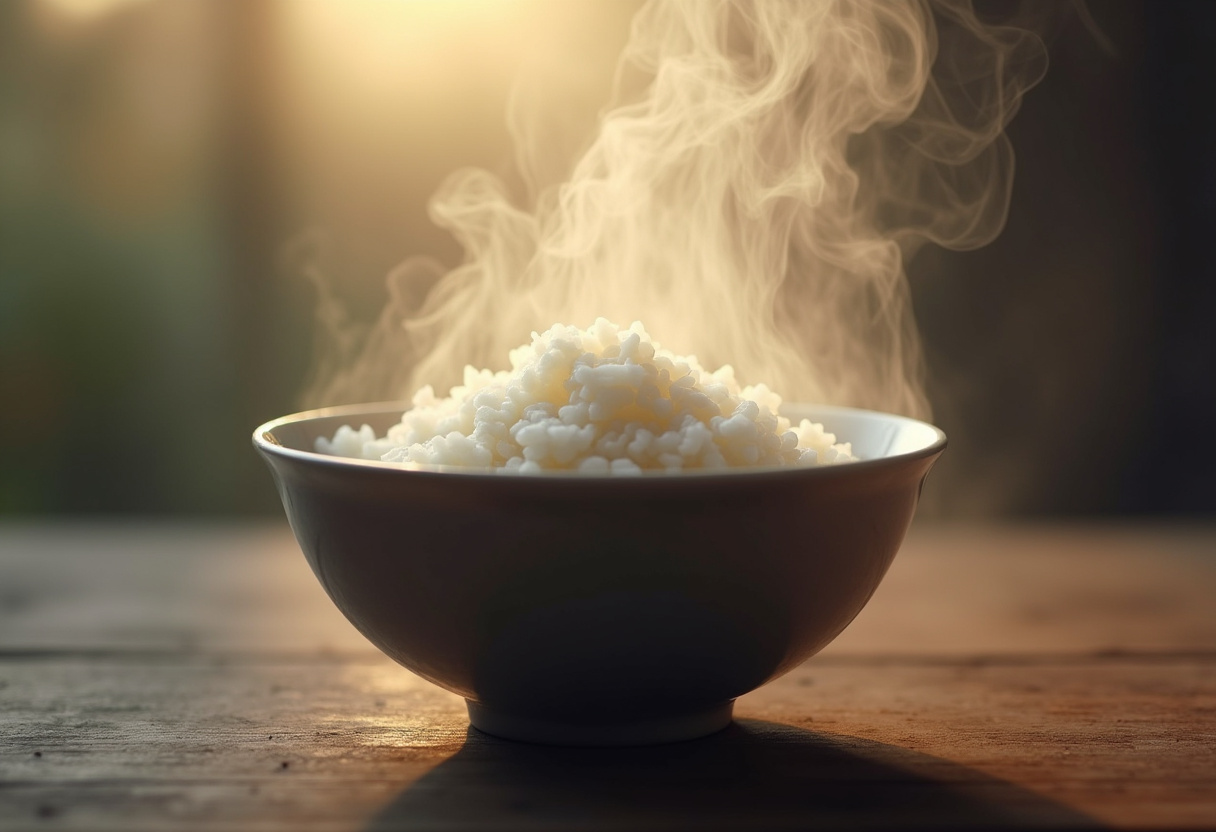
The character is 氣 (a simpler form, 气, is also common). Look at what it is made of. Across the top, a mark for rising vapour. Underneath, a grain of rice. Put together, what the character shows is steam rising off cooking rice.
That is not a claim about the earliest recorded meaning of the character, and it is not a linguistics lecture. It is simply what the character shows a reader when they look at its two pieces side by side — and once you see it, it is a genuinely useful picture to carry with you.
Three Things the Picture Tells You
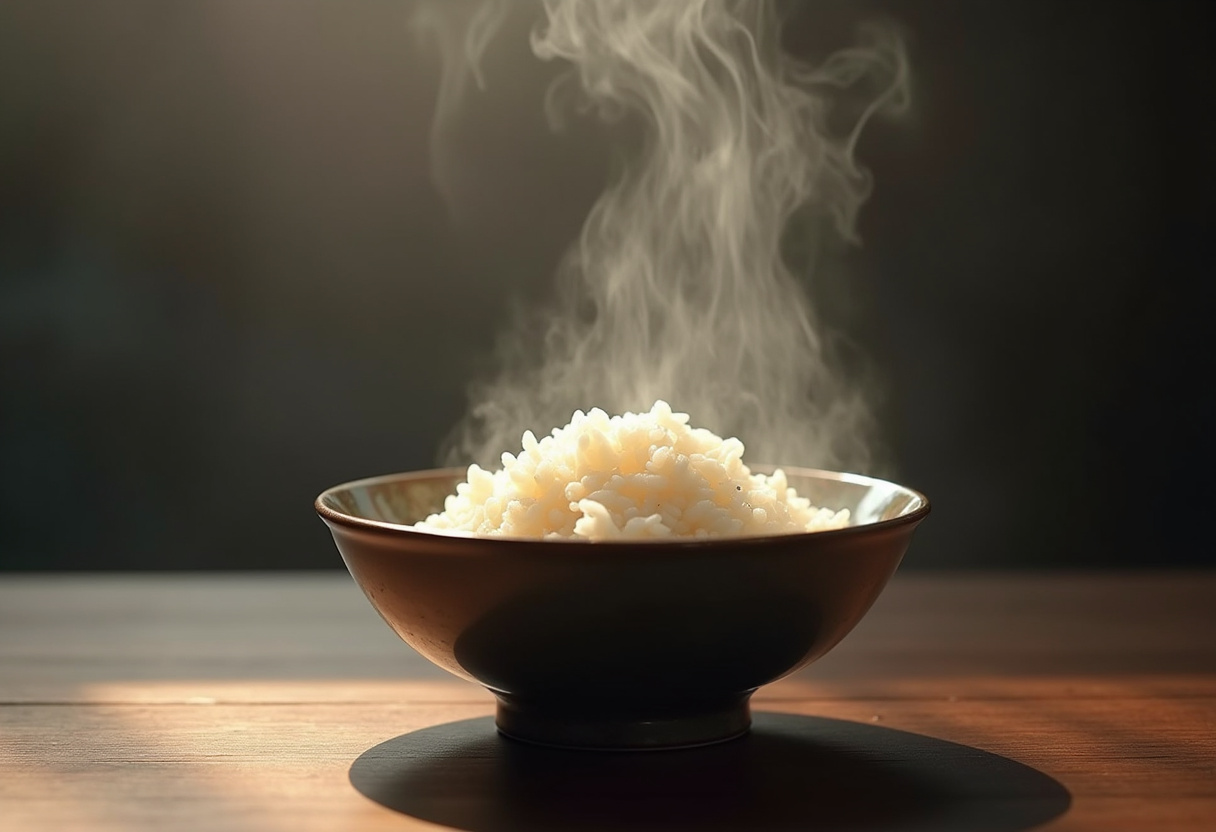
Sit with the image for a moment. Rice, cooking over heat. Steam lifting off the top.
First: you cannot see the steam being made. It is invisible in the moment it is produced — you only notice it once it is already rising.
Second: the rice is real, and the fire underneath it is real. The steam did not appear from nothing. Something concrete produced it.
Third, and easiest to miss: that invisible steam moves things. It lifts the lid off the pot. Watch a pot of rice cooking and you can see the lid rattle and rise, pushed by something you cannot hold in your hand.
Invisible. Produced by something real. And it moves things. That is the picture the qi character shows — and it turns out to be a much more complete description of qi than the single word “energy” ever was.
Why “Energy” Alone Falls Short
In English, “energy” is mostly a quantity. You have a lot of it, or you have very little of it, and that is usually where the conversation ends. Qi is a quantity too — you can have more of it on one day than another. But the character adds something English’s plain use of “energy” leaves out: qi does work. It is not simply a level sitting inside you. It is something that moves, shifts, and produces effects, the way steam lifts a lid.
You have almost certainly felt both halves of this already, even if you never had the word for it. On a day when you feel strong and warm, ordinary tasks feel light — the same work takes less out of you. On a day when you feel cold, tired, or drained, that same task feels heavy, even though nothing about the task itself changed. Same person. Same job. Different qi. The character was describing that difference long before you had a word to put to the feeling.
This is also why the character does not stop at a single grain of rice sitting quietly on a plate. It is rice over heat, mid-transformation, in the act of producing something that was not there a moment before. That is closer to how qi behaves in a living body than a static picture of stored energy would be — less like a battery holding a charge, more like a process that is always somewhere in the middle of doing something.
A Picture, Not a Proof — and Not a Medical Claim
It is worth being precise about what this etymology is and is not. Looking at what a character is built from tells you how Chinese speakers pictured a concept — it is a window into meaning, not a scientific description of the body, and not a medical or clinical claim of any kind. Nothing here is a statement about treating, diagnosing, or curing anything. It is a way of understanding a word that has been part of a very old practice, described here as clearly and honestly as the character itself allows.
Carrying the Picture Forward
Keep the picture simple enough to carry around: steam, rice, heat, a lifted lid. You do not need to remember a definition. You only need to remember what the character is showing you, and the three things that picture points to — invisible, produced by something real, and it moves things.
Once you have the image — vapour rising off rice, invisible, produced by something real, and doing visible work — the rest of qigong’s vocabulary gets easier to follow. Qi is only ever half of the word “qigong.” The other half, gong, describes what happens when that energy is trained over time rather than simply noticed. Understanding one half properly makes the other half make sense.
If you want to go further into what qi actually is beyond the character itself, the article What Is Qi, Really? takes the concept further. And if you want to start working with qi directly rather than only reading about it, the Onenergy App teaches guided daily practice built around exactly this understanding. Start with the free Onenergy App and see what the character has been describing all along.
Related reading
- What Does Gong Mean in Qigong?
- What Is Qi, Really?
- Qigong Is Something You Build, Not Something You Do
- What Is Qigong? The Complete Guide