
Why Fixing One Spot Changes Your Whole Body
Somebody works on your shoulder and that night you sleep better — nobody touched your sleep. Why does a massage help my sleep? Because the body is one connected system, not a set of separate parts.


Tag · 126 articles
Every Onenergy article tagged Qigong Basics, newest first.
Somebody works on your shoulder and that night you sleep better — nobody touched your sleep. Why does a massage help my sleep? Because the body is one connected system, not a set of separate parts.

You can’t stop thinking about something, and it isn’t just in your head. Attention that stays in one place moves qi there too — which is why a stuck thought has an address, and why walking it off actually works.

Why are my neck and shoulders always tight? This is where several of the body’s qi circuits cross in one heavily used stretch — here is why, in plain terms.

What causes energy blockages? Rarely one dramatic event. Almost always something small, repeated for years, until it quietly stops qi from moving.

Does a blockage hurt? Usually not — a blocked place tends to go quiet, not loud. Here is why the discomfort often shows up only once it starts moving again.

Why does pressing on a knot make it worse? Because there is no knot to remove — only qi that stopped moving. Here is what actually helps instead.

What is an energy blockage, really? A plain, non-medical answer using something you have already lived through: the leg that went numb, then moved again.

Can you learn qigong from YouTube? A video can teach you how to open a practice. It cannot see your shoulders climbing, cannot see you holding your breath, and it almost never shows you how to close what you opened.

Qigong is safe, and qigong is sharp — the sharpness is why it works. Five plain rules keep a real, effective practice from becoming a rough one: don’t force, don’t chase sensation, don’t practise exhausted, close what you open, and slow down when something feels wrong.
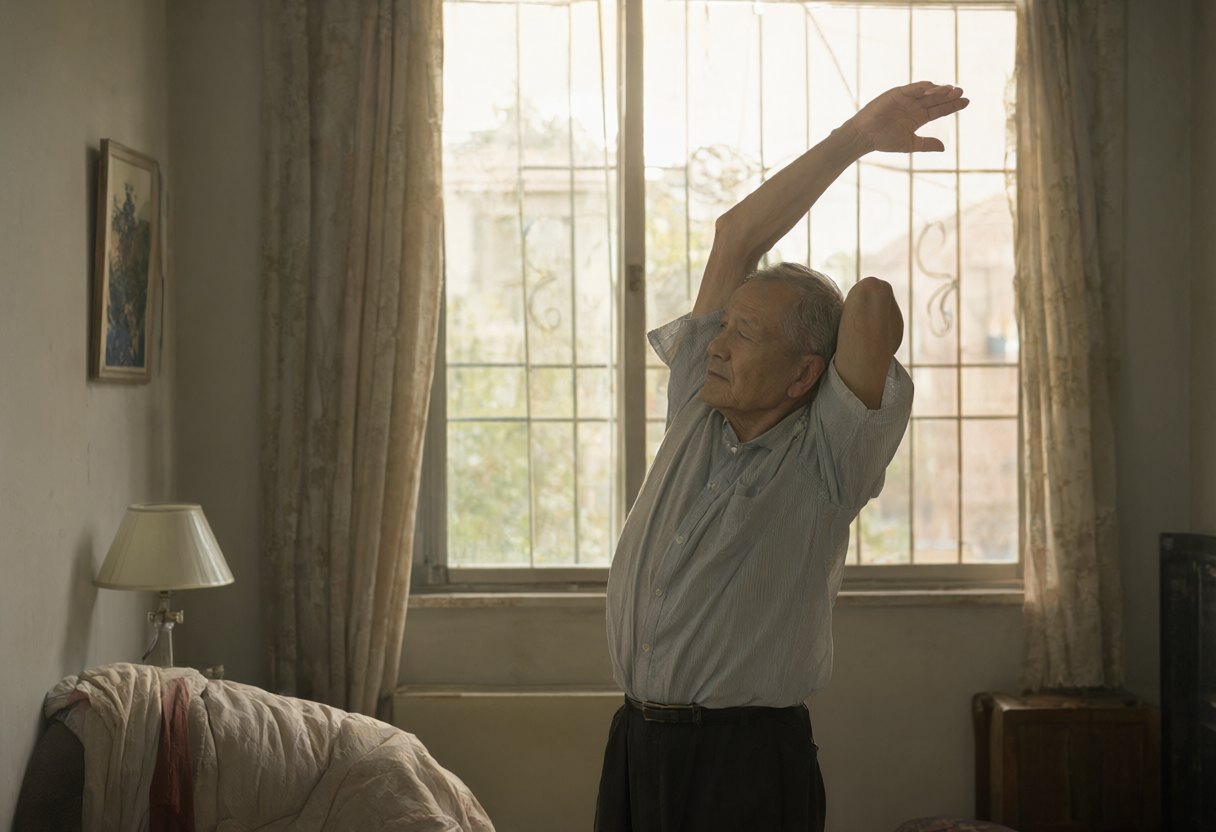
Anger sent your qi up. A hard day drained it. A walk brought it back down. You have been moving qi your entire life — you just never had a name for it, or a way to do it on purpose.

Someone tells you to go for a walk when you’re stuck in your own head, and it works. Here’s the qigong mechanism behind it — and why that ordinary advice is qigong you were already doing without a name for it.

In Chinese, anger is called sheng qi. The common gloss stops at “to make energy.” The fuller meaning is qi rising — and it explains the hot face, the pounding head, and why you can’t think straight when you’re angry.